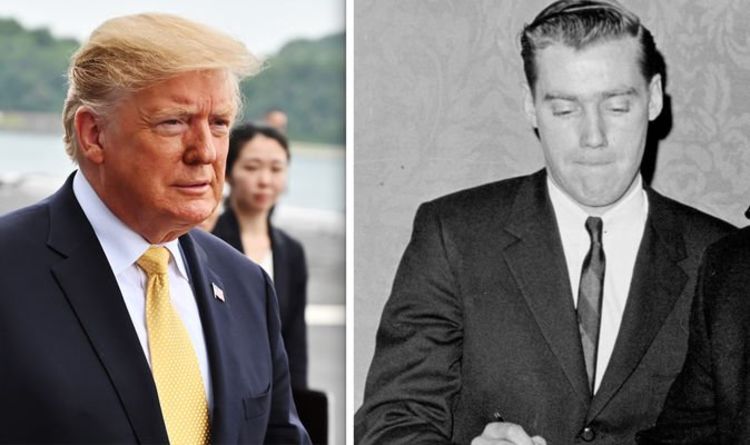
Too Much and Never Enough: How My Family Created the World’s Most Dangerous Man, Mary L Trump, USA, 2020
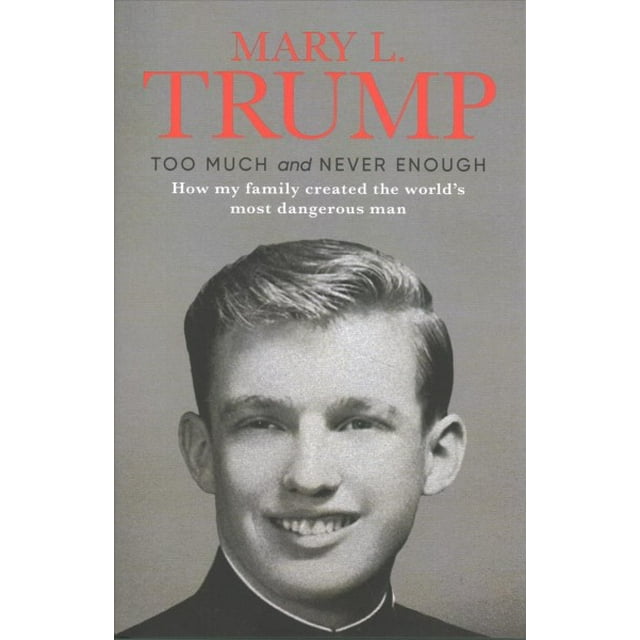
At the end of her book, Mary writes: ‘Donald today is much as he was at three years old: incapable of growing, learning, or evolving, unable to regulate his emotions, moderate his responses, or take in and synthesize information.’
Donald is the fourth of five children – Maryanne, Freddy, Elizabeth, Donald and Robert – born to Fred and Mary Trump. The eldest son, Freddy (the author’s father), almost eight years older than Donald, should have been the son taking over the successful Trump real estate business, but Fred and Freddy were two very different people. While Fred, the patriarch, was basically a sociopath, Freddy, the son, was interested in things beyond the business, including people, which Fred interpreted as a weakness and weakness always needed to be rectified. That Freddy wanted to be able to do his own thing – fly planes – his father interpreted it as a personal affront and retaliated by humiliating and rejecting his eldest son.
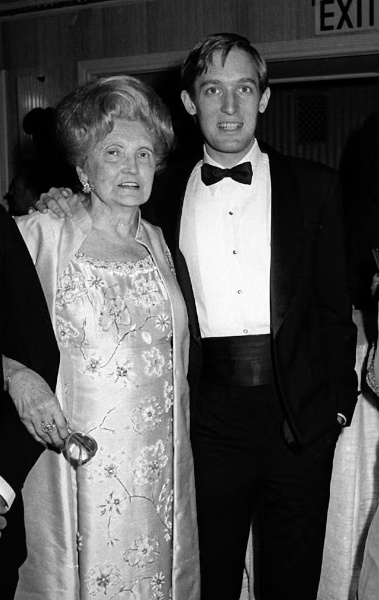
Fred and Donald were much more alike, and although Fred was sufficiently astute to realise that Donald lacked the skills necessary in order to run a successful business, he knew that he could still use him. Like Fred, Donald was a narcissist with not a scrap of empathy (empathy was a sign of weakness), and Fred was able to appeal to Donald’s bloated sense of self to make him believe that he was invincible. Donald could not help but observe how his father treated Freddy, and he learnt, at a very early age, to equate fear with weakness. Even now, almost eighty, he clothes everything in superlatives to hide any possibility that he may appear weak or ‘out-of-touch’ or, as is often the case, completely ignorant.
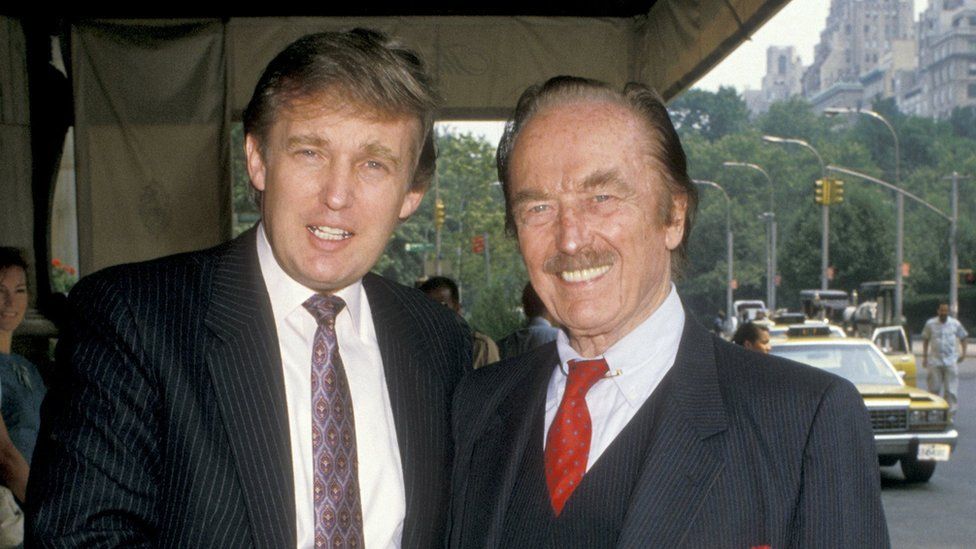
After promoting Donald to the-next-man-in-charge, Fred was able to control his son by having the right people close by to make the decisions and do the work. Nevertheless, by the 1980s, Donald’s penchant for launching impossible projects and taking exorbitant bank loans were threatening to bankrupt the company – Frankenstein’s monster could no longer be controlled. Shortly before his father died in 1999, and with the help of a couple of lawyers, Donald drew up a paper that would have given him complete control of the Trump estate and which would have meant that his siblings would have had to seek his approval for even the smallest transaction. At the time, Fred was battling Alzheimer’s and had good days and not-so-good days. Fortunately for the rest of the family on the day the lawyers handed the paper to him to sign, he was having a relatively good day and he refused to sign. His wife, Mary, suspected that something was not as it should have been and that Donald was somehow involved. As a result Donald’s scheme was uncovered and a new paper was drawn up, giving the remaining four siblings equal rights. When Freddy, an alcoholic with a broken marriage and a broken life, died in 1981 at the age of 42 it was as though that branch of the family had never existed.
The one thing holding the Trump family together is money. There is no evidence of love or concern, no sympathy or empathy, no interest in anything beyond accumulating as much money as possible. Donald has grown up in an environment that taught him nothing about relating to other human beings in a normal manner. Told since he was a child that he is smart and invincible, he truly believes the fiction. As long as people look up to him and impress upon him that he is amazing then he is happy to call them friend; as soon as anyone says something negative about him or about what he is doing then he/she is ‘nasty’ and he will have nothing more to do with them. The energy needed to keep friends onside and ‘nasty’ people at a distance, together with ‘… the effort to keep the rest of us distracted from the fact that he knows nothing – about politics, civics, or simple human decency – (…) requires an enormous amount of work’. The question is who, if anyone, is going to be brave enough to acknowledge that the emperor actually has no clothes.