Baron Wenckheim’s Homecoming, László Krasznahorkai, Hungary, 2016
English translation: Ottilie Mulzet
(All quotes in this review have been taken from the Tuskar Rock Press edition, published 2019)
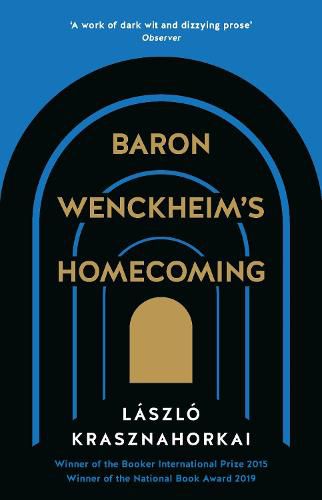
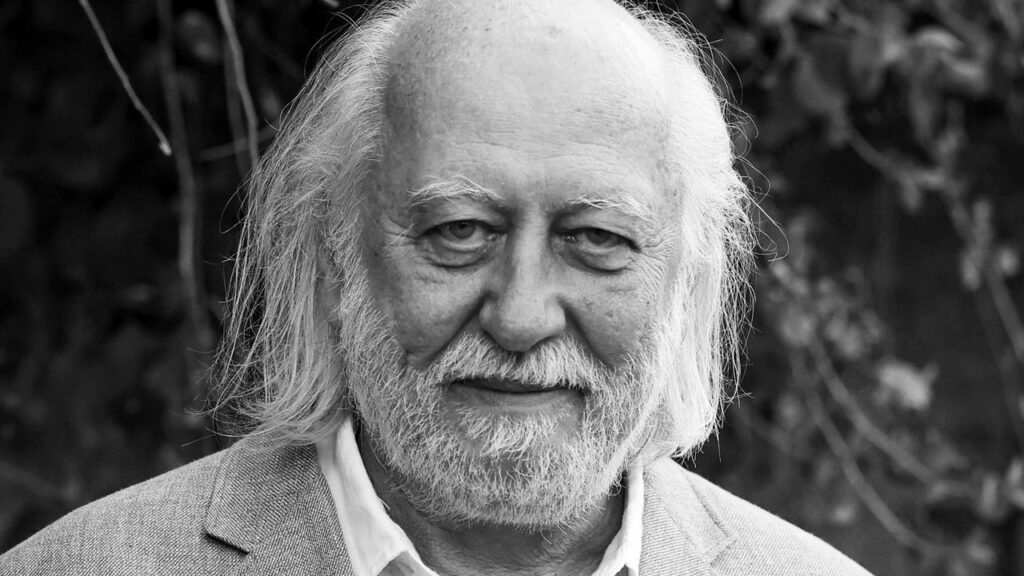
László Krasznahorkai was awarded the Nobel Prize in Literature for 2025. and as I had never heard of him I decided to rectify the situation by borrowing one of his books from the local library. The book I borrowed was Baron Wenckheim’s Homecoming. It is an amazing book but definitely not a one-night read. At 558 pages with paragraphs – indeed, sentences – occupying several (oftentimes, many) pages it can be confronting to say the least; however, by entering Krasznahorkai’s world and attempting to follow at least some of his remarkable perception, it can be an unforgettable experience.
Initially it appears that the centre of this extraordinary, dark, humorous, worrying, almost absurd, story is the Baron Béla Wenckheim, who as a young man left his hometown in Hungary for a life of exile in Argentina. Forty-odd years later, with a stupendous gambling debt hanging over his head, the baron decides to return home. Now in his sixties, more eccentric than senile, nothing is as he remembers it, not even the girl (Marika) whom he may once have loved but left behind. The people of the town are delighted to welcome him home (possibly regarding him as some kind of messiah), expecting to share in what they believe is unlimited wealth; Marika hopes only for a blissful reunion.
However, although the Baron is an important figure in Krasznahorkai’s story, I believe that the actual centre of the story is the small provincial town: a backwater filled with petty problems, inward thinking, pompous politicians and tedious community leaders. The Baron simply triggers the series of events that lays bare the absurdity behind the town’s unremarkable façade.
Parallel to the Baron’s homecoming is the story of the Professor, a philosophic academic living in the town who has devoted his life to the study of mosses. Shortly before we meet him at the beginning of the book he decides that his life has been a farce and moves to an overgrown wilderness area on the outskirts of the town known as the Thorn Bush. Here he fashions together a shack from rubbish left lying around and focuses his energies on the task of attempting to banish thought. “… to reach a state where we don’t even begin to start thinking, but we simply allow ourselves to be woven into existence, allowing ourselves to while away our appointed time like a piece of worn-down stone on the banks of a brook, as it allows, let’s say, moss (…) to settle down upon it…” (Page 290).
The Professor’s questionably idyllic change-of-life situation becomes threatened by the appearance of an aggressive adult daughter (with whom the Professor has had no contact and does not know) who demands an awesome amount of money, as well as by a motorbike gang that initially looks upon the Professor as an inspiration and a guide but, after a traumatic incident where one of the bikers is killed, is intent on killing him.
The multitude of characters and situations are not so much woven as pressed together where the focus – characters, places and situations – keeps changing without warning. Conversation is not indicated as such and it can quickly morph into a completely different character’s thought and the thought can then be replaced by a narrative that can often seem altogether out of place.
A subdued but definite sense of humour runs through the book, alongside the dark and oftentimes worrying images that may encourage the reader to look at everyday life from a completely different perspective. Why we live, together with concepts of fear, good and evil permeate the superficial ordinariness of a man returning home and a town preening itself in hope of some monetary reward.
Then the Chief Editor of the town newspaper is sent an anonymous letter stating that ‘… Hungarian morals have reached rock bottom, and this is enough, namely even this explanation is sufficient: the Hungarian is equivalent to the lowest degree of moral debasement with no place left to fall, this is the formula; of course, we have to proceed very cautiously here, because we can easily fall into the trap of asserting that there is someplace to fall from; well, no, there’s no question of that, there is no past which shows itself more clearly than ours, because without trampling through all the historical details, we can designate the entire history of the Hungarian–the glorious past so eulogized by our fathers as the history of shame, for in that history there is more betrayal, apostasy, perfidious intrigue, ignominious defeat, well-deserved failure, base vengeance, merciless retaliation, and brutality that no hypocrisy can mask, how should I put it (…) more than a deer full of gunshot…’ (Page 473) and so on. When the Chief Editor, against the wishes of many of the other community leaders, publishes the letter in his newspaper the climax of the book manifests itself in an absurd shattering of the town, its hopes (both good and bad) and everyone in it.
This is the final book in Krasznahorkai’s quartet: Satantango, The Melancholy of Resistance and War and War, and it not only completes the quartet but it pulls them together and elevates them as one amazing work. “I’ve said a thousand times that I always wanted to write just one book. Now, with Baron, I can close this story. With this novel I can prove that I really wrote just one book in my life. This is the book–Satantango, Melancholy, War and War, and Baron. This is my one book.” László Krasznahorkai (The Paris Review Interview)
Not everyone will resonate with this book: some readers will set it aside after only a few pages while others who persevere to the end will possibly wonder why Krasznahorkai needed to make the journey so difficult. But many who enjoy the journey will turn around at the end and decide to retrace the steps they have already taken. I now realise that, although Baron Wenckheim’s Homecoming is a ‘stand-alone’, it should probably be read after the three preceding books in the quartet. I am beginning to feel that my reading for the next few months is well and truly taken care of.